Loading...

Stripe Subscription flow 1.2 (Creating the subscriptions)
Stripe Subscription flow 1.2 (Creating the subscriptions)
Let’s wrap up our Stripe setup for the subscription flow by using the data received from Stripe webhooks after a successful payment. We’ll use this data to create the subscription in our database and update the corresponding account. This ensures that each account has access to the correct features based on their subscription.

Payments
Learning Highlights
- 0:45
Learn how to implement subscription backend logic by listening to Stripe webhook events and processing payment data to create subscriptions.
- 3:48
Understanding why subscription IDs must be text format, not UUIDs or integers, when integrating Stripe's payment system with your database.
- 7:07
The key to automating feature entitlements lies in mapping product definitions to account permissions based on subscription data from webhooks.
- 11:51
How to bypass authentication requirements using Supabase admin API keys when webhooks trigger server-side subscription creation without user tokens.
💡
Interactive diagram used in the video
Subscription flow 1.1 (Generating checkout sessions)
Trigger a Stripe Checkout Session from your pricing page to handle user subscriptions properly
Prompt Used in Video
Ready to start a new course?
Continue your learning journey with these carefully curated courses
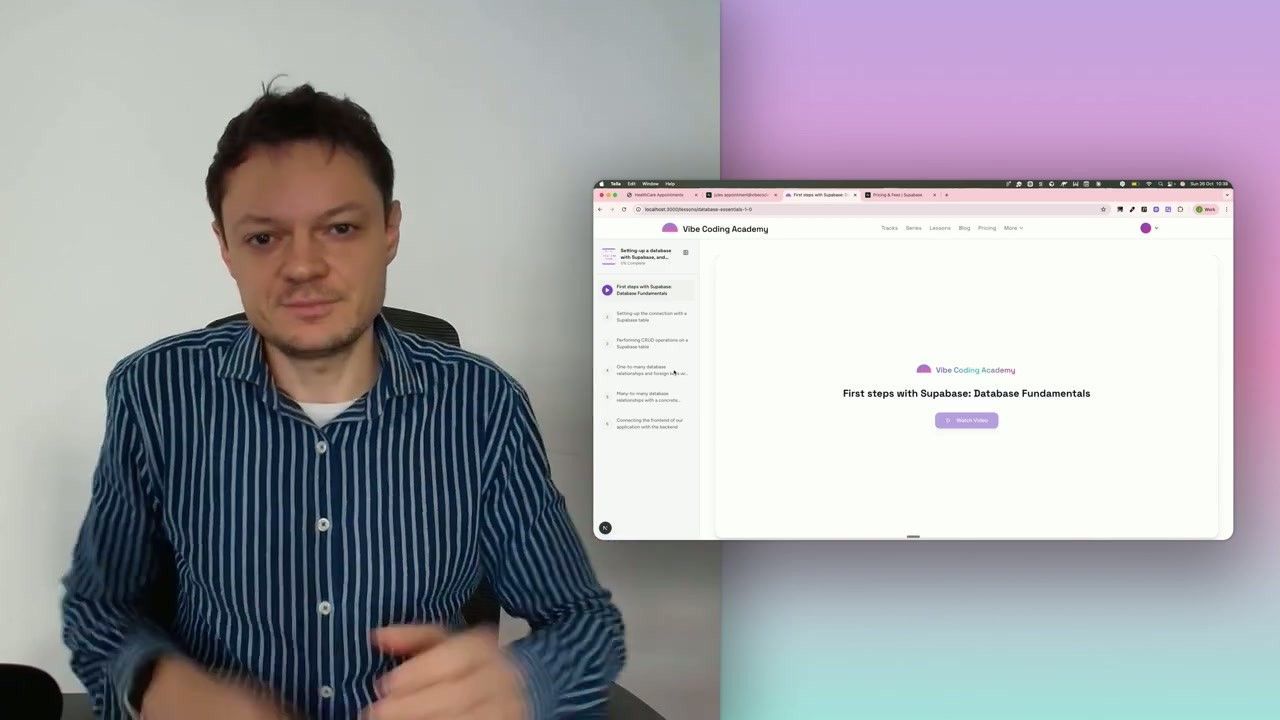
Course
Setting-up a database with Supabase, and building our first CRUD API endpoints
Learn how to connect your application to a Supabase database, then validate the setup by creating your first API endpoints to perform basic CRUD operations (Create, Read, Update, Delete).
6 lessons
0 min

Jules BoiteuxFounder @Vibe Coding Academy
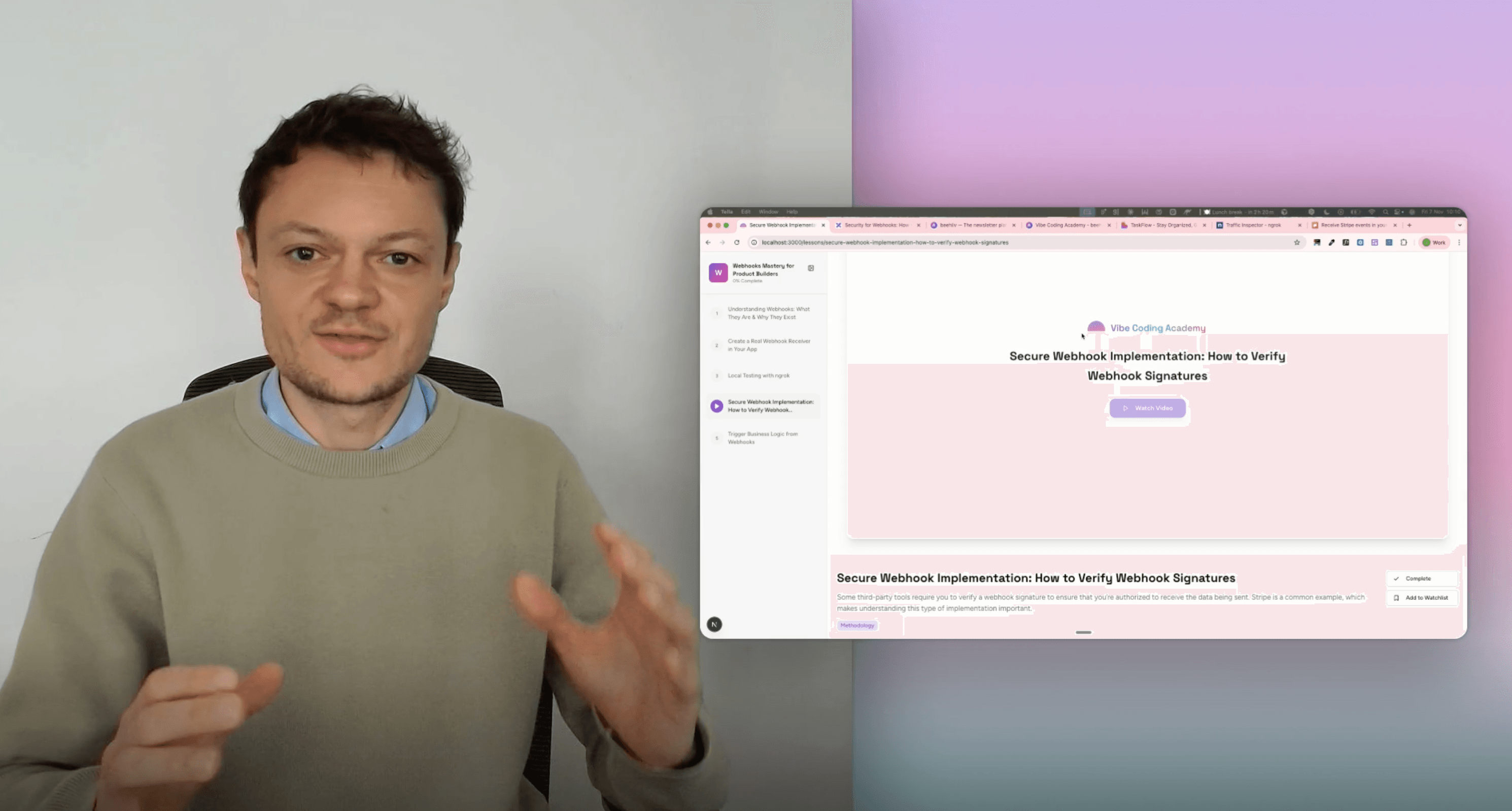
Course
Webhooks Mastery for Product Builders
Many third-party integrations rely on webhooks. Stripe is one of the most important examples, which makes it essential to understand how to implement webhooks correctly in your app and build reliable business logic on top of them.
5 lessons
0 min
Jules BoiteuxFounder @Vibe Coding Academy