Loading...

Setting-up workflows around the Accounts
Setting-up workflows around the Accounts
Before diving into Stripe objects, we first need to create a new Account object. This will act as an extended version of the user, storing additional attributes, such as the stripe_customer_id if the user becomes a customer.

Payments
Learning Highlights
- 0:50
Understanding why accounts tables are essential beyond Stripe integration, serving as a foundation for managing user data, feature entitlements, and future tool integrations in your application.
- 3:47
The key to maintaining clean, consistent code from the start is that Cursor AI learns from your existing codebase patterns, automatically implementing best practices like authentication without explicit prompting.
- 6:20
Learn how to validate CRUD operations using Postman by testing API endpoints with proper authentication tokens, ensuring your accounts table correctly fetches and manages user records.
- 8:28
Discover why authentication timing matters during user signup flows: attempting to authenticate before account creation fails, requiring temporary security workarounds that must be addressed in production implementations.
💡
Interactive diagram used in the video
Setting-up workflows around the Accounts
Create an accounts table to map Stripe customers and store their plan-based feature entitlements.
Prompt Used in Video
Ready to start a new course?
Continue your learning journey with these carefully curated courses
Course
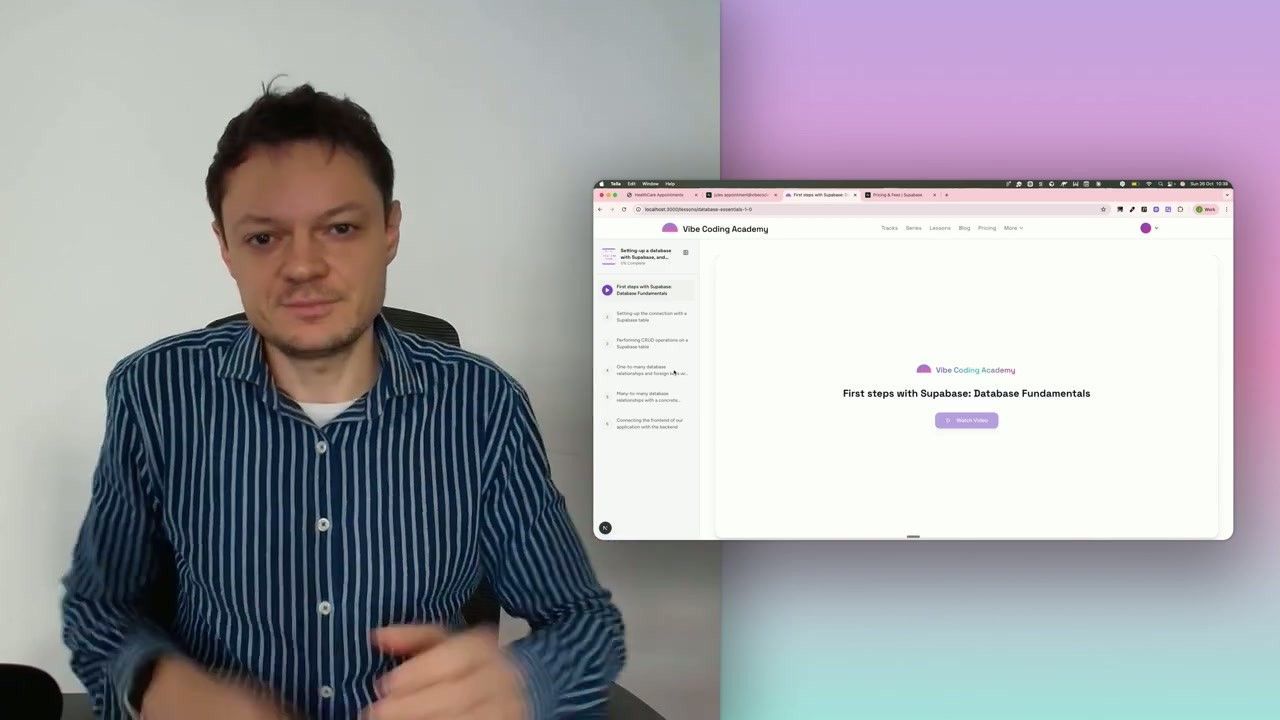
Setting-up a database with Supabase, and building our first CRUD API endpoints
Learn how to connect your application to a Supabase database, then validate the setup by creating your first API endpoints to perform basic CRUD operations (Create, Read, Update, Delete).
6 lessons
0 min

Jules BoiteuxFounder @Vibe Coding Academy
Course
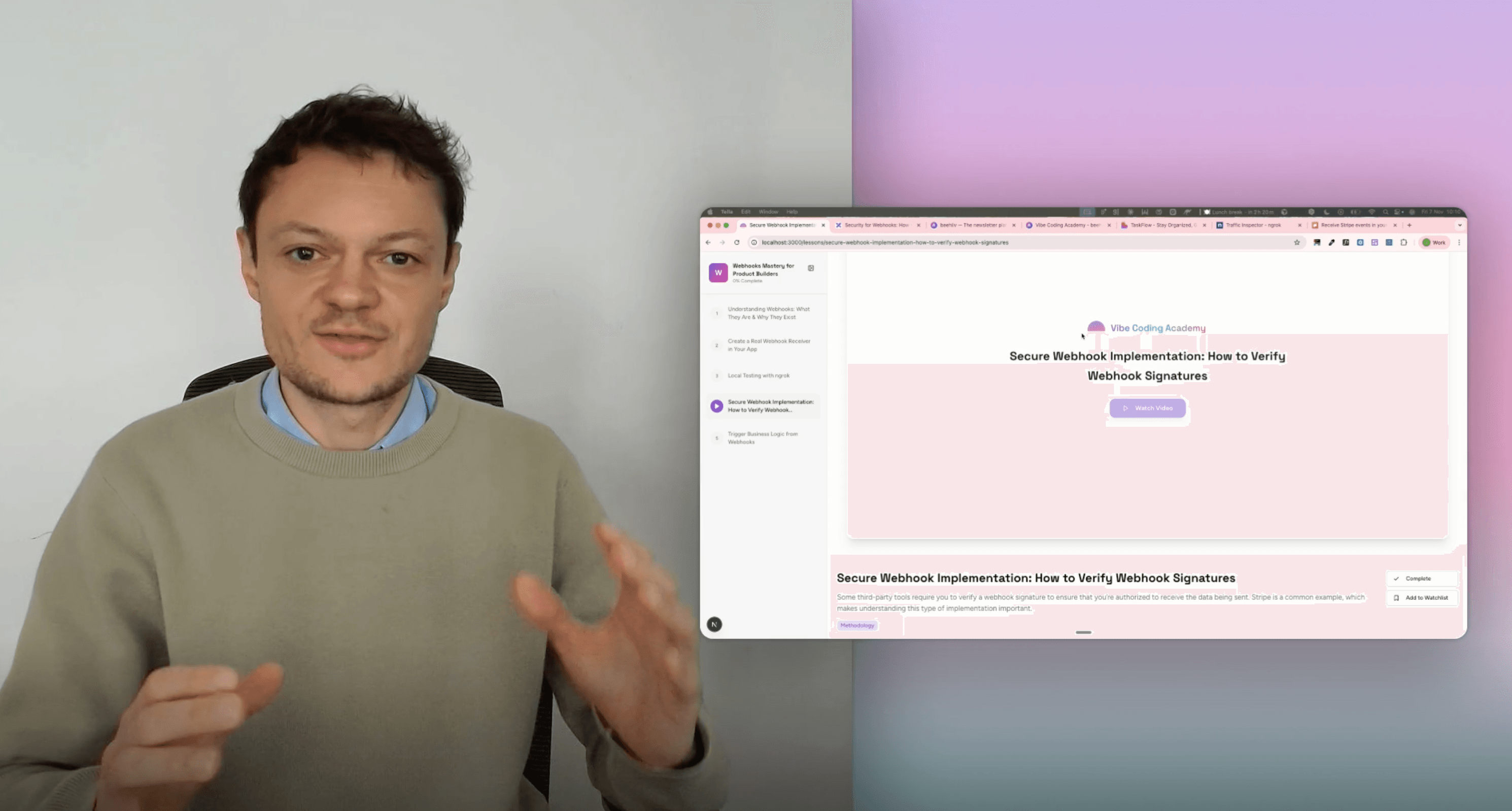
Webhooks Mastery for Product Builders
Many third-party integrations rely on webhooks. Stripe is one of the most important examples, which makes it essential to understand how to implement webhooks correctly in your app and build reliable business logic on top of them.
5 lessons
0 min
Jules BoiteuxFounder @Vibe Coding Academy