Most product managers I talk to are using Claude Code the same way they used ChatGPT two years ago: one-off prompts, no memory, no system. You ask it to summarize an interview, you copy the output into a doc, and tomorrow you start from zero again. That works, but it caps out fast, because the value of Claude Code workflows isn't any single answer, it's the fact that the outputs of one step become the inputs of the next.
This article treats Claude Code as what it actually is for a product team: an operating system that can run the whole feature lifecycle, from the first messy pile of user interviews to the stakeholder update after launch. Not one clever prompt, ten connected skills, organized by the stage of work they support, so a claude code prd stops being a document you write alone at 11pm and becomes the output of a repeatable pipeline.
Key Takeaways
- Claude Code delivers the most value as a chained workflow, not isolated prompts, where the output of one skill becomes the input of the next across the full feature lifecycle.
- Ten purpose-built skills cover discovery, definition, design, and delivery, from user-interview-synthesizer and funnel-analyst to PRD-writer and launch-recap-writer.
- A well-run claude code prd workflow interviews you first and refuses to write solutions before the problem section is solid, closing the biggest source of wasted engineering time.
- Three named workflows, the PRD pipeline, the prototype loop, and the launch loop, connect evidence, assumptions, and metrics so nothing gets rewritten from scratch at each handoff.
- McKinsey found 78% of organizations now use AI in at least one business function, with product and R&D among the fastest-growing use cases.
- For product managers, starting with just the PRD pipeline, user-interview-synthesizer plus PRD-writer, removes the two most time-consuming, most error-prone steps before adding the rest.
Learn this hands-on
Go from idea to a live product with real users. Build and ship your first SaaS with Claude Code in a live cohort, with auth, payments and deployment done by the end. Join the Ship Your First SaaS with Claude Code cohort.
Why "Workflows," Not "Prompts"
A prompt answers one question. A workflow chains steps so the output of skill one becomes the input of skill two, and so on until you reach something shippable. That distinction matters because most of a PM's job is not a single task, it's a sequence: talk to users, prioritize, write the spec, validate the design, hand off to engineering, measure what happened, and start again.
Claude Code supports this through skills, small, purpose-built instructions that Claude runs when a job matches their description, the same building block covered in building your first PM agent. Each skill below does one job well. The real leverage comes from chaining them, which we'll map out in three named workflows toward the end.
Discovery: Turning Noise Into Evidence
The discovery stage is where most PM tooling still fails. You have interview transcripts, analytics dashboards, and competitor screenshots scattered across four tools, and turning that into a defensible "here's what we should build" argument usually means a weekend of manual synthesis. Three skills fix that.
1. User-interview-synthesizer
Feed it raw interview transcripts or call notes (Granola is the obvious source if you already record your user calls there). It outputs a structured insight document: pains ranked by frequency, verbatim quotes attached to each pain, and candidate opportunities worth investigating. The part that actually compounds over time: it appends every run to a running insights/ knowledge base, so by your twentieth interview you're not starting from scratch, you're querying six months of evidence.
As Teresa Torres, Product Discovery Coach and author of Continuous Discovery Habits, puts it, "The most common antipattern right now is lazy AI interview synthesis." That is exactly the failure mode a properly built skill has to avoid: it is not skipping synthesis, it is turning raw transcripts into a structured, evidence-backed insight document instead of a summary nobody ever interrogates.
2. Funnel-analyst
Point this one at your analytics (an Amplitude MCP connection is the opinionated choice here). Ask it "where are users dropping off and why does it matter," and it does the unglamorous parts of an analyst's job for you: picks the right chart type for the question, segments the data properly instead of showing you an aggregate that hides the real story, and, critically, returns one highest-ROI action instead of a wall of charts you now have to interpret yourself. A data dump isn't an insight. A single recommended action is, and it's the same philosophy behind the rest of the agent stack that replaces hand-offs to growth, data, and eng.
3. Competitor-teardown
Give it two or three competitor URLs. It uses browser automation, the kind now built into Claude in Chrome, to capture screenshots, then returns a positioning map, a feature-gap table, and a pricing comparison. This is the skill that turns "let's do a competitive audit" from a half-day task into something you run before a Tuesday planning meeting.
Definition: Where the claude code prd Actually Gets Written
This is the stage where discovery becomes a decision, and it's also where the highest-leverage skill in the whole system lives.
4. Opportunity-prioritizer
Feed it a messy idea list, or better, point it at the insights folder skill 1 has been building. It returns RICE scoring, but the part that matters is that every score comes with an explicit, challengeable written assumption behind it. No more "reach: 8" with no explanation you can push back on. It also produces a "what we're explicitly NOT doing" section, which is the single most underused artifact in product prioritization and the one stakeholders actually remember from the meeting.
5. PRD-writer
This is the centerpiece of the whole system, and it's built around one opinionated one-page template: problem, evidence, non-goals, success metrics, open questions. What makes it different from "write me a PRD" in a generic chat window is that it interviews you first, asking the five questions a good engineering manager would ask before writing a line of a spec, instead of hallucinating a plan from one sentence of context. It also refuses to write solutions before the problem section is solid, which sounds like a small guardrail until you realize how much wasted engineering time comes from specs that skip straight to "build X" without ever nailing down why.
A well-run claude code prd workflow means the PRD you get out the other side has already survived the questions an EM would have asked in the review meeting, before that meeting happens.
6. User-flow-mapper
Takes the finished PRD and turns it into user flow diagrams. The opinionated choice here is Mermaid: it renders anywhere (GitHub, Notion, your docs), it's git-versionable so you can track how a flow evolved across PRD revisions, and it has an optional FigJam export path via the Figma MCP server when a designer needs to work in a more visual tool.
Design and Validation: Before Engineering Ever Opens a Ticket
7. Prototype-builder
Takes the PRD and flows and drives Lovable via MCP into a clickable prototype, then iterates based on your feedback, the same workflow we walk through step by step in building a professional frontend prototype with Lovable, Bolt, or v0. The skill encodes prompt patterns that consistently produce good Lovable output: explicit design constraints so it doesn't invent a random visual language, scope guardrails so it doesn't build features nobody asked for, and a persistent "prototype, not production" framing so nobody mistakes a fast mockup for shippable code.
8. Experiment-designer
Turns a hypothesis into a proper A/B test spec: the metric you're actually measuring, minimum detectable effect, a sanity check on whether your traffic can reach it in a reasonable window, guardrail metrics so you don't win on conversion while quietly breaking retention, and a pre-registered decision rule so nobody gets to move the goalposts after the results come in.
A recent McKinsey Global Survey on AI found that 78% of organizations report using AI in at least one business function as of 2025, up sharply from the year before. Product and R&D functions are among the fastest-growing use cases, which tracks with what this pipeline is really doing: moving AI from "a tool someone on the team plays with" to the operating layer the whole feature lifecycle runs on.
Delivery and Post-Launch: Closing the Loop
9. Eng-handoff-writer
Takes the PRD and turns it into scoped, testable tickets formatted for Linear or Jira: user story, acceptance criteria, edge cases, and, the part most handoffs skip, the analytics events that need to be instrumented before launch. That last section is the real differentiator. Most PRD-to-ticket handoffs lose the measurement plan somewhere between the spec and the sprint board, which is exactly why so many launches ship with no way to tell if they worked.
10. Launch-recap-writer
Pulls the actual numbers (again via Amplitude), compares them against the success metrics defined back in the PRD, and writes the stakeholder update along with a keep, iterate, or kill recommendation. This is the skill that closes the loop: it feeds directly back into skill 2, the funnel-analyst, so the next discovery cycle starts from what you just learned instead of from zero, provided your setup keeps that context around instead of losing it, which is exactly what Claude Code Memory is built to prevent.
Three Chained Workflows, Not Ten Isolated Tools
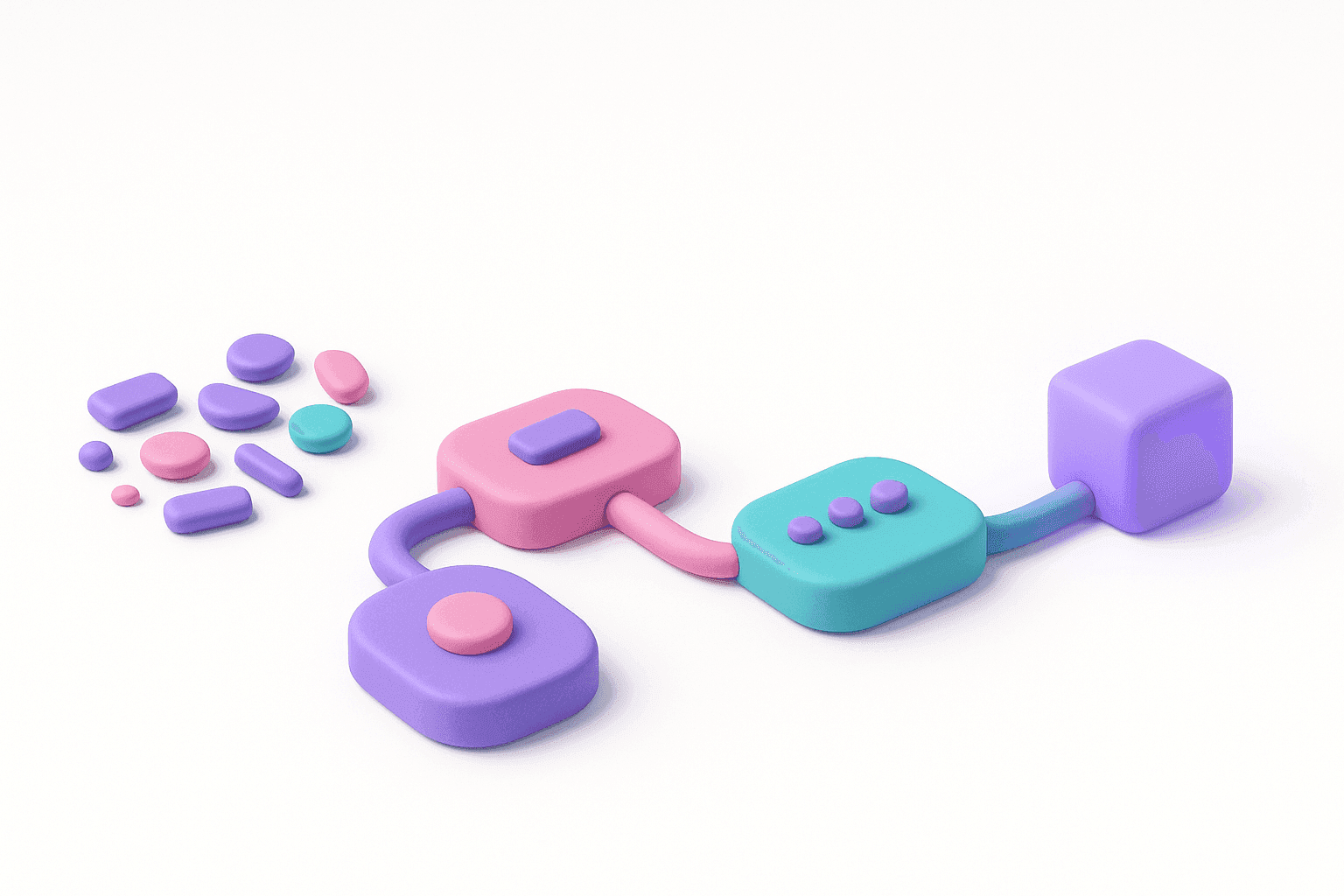
The individual skills are useful on their own. The reason to think of this as an operating system is that they chain into named workflows that mirror how a feature actually moves through a team.
The PRD pipeline: user-interview-synthesizer feeds opportunity-prioritizer, which feeds PRD-writer, which feeds user-flow-mapper. Four skills, one continuous run, and what comes out the other end is a claude code prd that's already grounded in ranked evidence instead of a hunch.
The prototype loop: PRD-writer and user-flow-mapper feed prototype-builder, and prototype-builder keeps iterating against your feedback until the clickable prototype is good enough to put in front of five users. This loop can run in an afternoon instead of a two-week design sprint.
The launch loop: eng-handoff-writer ships the ticket, launch-recap-writer measures the result against the PRD's own success metrics, and its output feeds straight back into funnel-analyst for the next cycle. This is the loop that actually makes "we ship, we measure, we learn" true instead of aspirational.
Run all three back to back and you've covered the entire feature lifecycle inside one connected system, with your evidence, your assumptions, and your metrics traveling with the feature the whole way instead of getting rewritten from scratch at every handoff.
Product manager and want to work like this? This is exactly what we teach in Claude Code for PMs, our live cohort for product teams: 3 live sessions of 90 minutes over 2 weeks. Every PM ships a real feature, builds their own agent, and gets personalized written feedback.
Start With One Skill, Not All Ten
You don't need to build all ten skills before this pays off. Most teams get the fastest win from the PRD pipeline alone: user-interview-synthesizer plus PRD-writer removes the two most time-consuming, most error-prone steps in the whole lifecycle. Once that's running, add the launch loop so you actually close the feedback cycle instead of moving straight to the next feature.
The mechanics of how each skill file is actually built (the SKILL.md structure, the frontmatter, the tool permissions), and how to package and share that whole set with the rest of your team once it works, are covered in how skills, subagents, and custom commands travel across a team. What matters here is the shape: Claude Code workflows aren't a productivity trick for individual tasks, they're the connective tissue that lets a product team run PRD to shipped feature as one system instead of ten disconnected tools and a lot of copy-pasting in between.